Sha’Carri Richardson’s UNICEF Ambassador Claim Sparks Widespread Emotion and Debate Online
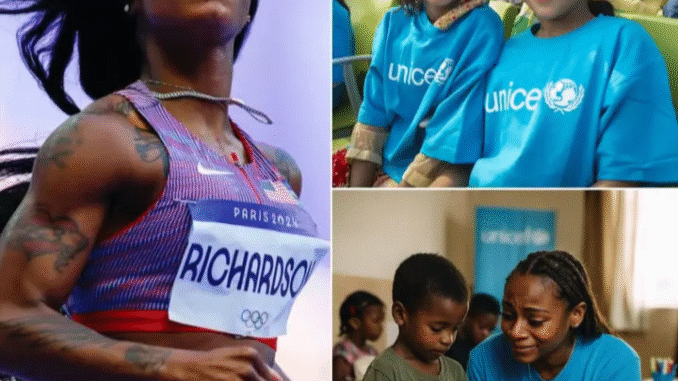
A viral social media post claiming that American sprint star Sha’Carri Richardson has officially become a UNICEF Global Ambassador and donated millions of dollars to help poor children has captured widespread attention across Facebook and other platforms. The post, accompanied by striking images of Richardson on the track and smiling children wearing UNICEF shirts, has generated strong emotional reactions, with fans praising what they see as a powerful example of compassion and global responsibility from one of athletics’ most recognizable figures.
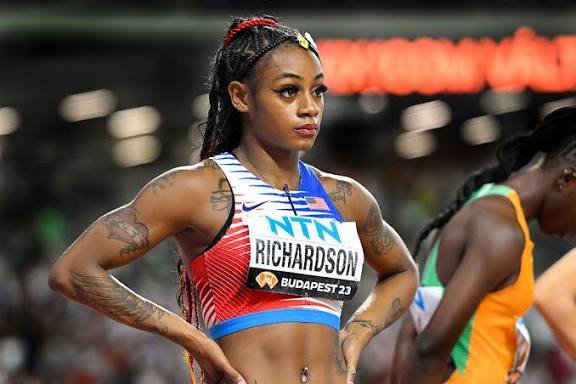
The post suggests that Richardson’s alleged involvement with UNICEF was inspired by a young patient’s story that deeply moved her and her supporters alike. The language of the post is emotive, describing fans’ “hearts skipping a beat” as they reacted to the news. Within hours, the content attracted hundreds of likes, comments, and shares, reflecting both admiration for Richardson and the public’s appetite for uplifting stories involving celebrities using their influence for humanitarian causes.
Sha’Carri Richardson is widely known not only for her electrifying speed on the track but also for her outspoken personality and resilience in the face of adversity. Since rising to global prominence, she has become a symbol of confidence, individuality, and perseverance, particularly among young people. As a result, any story connecting her name with charitable work, especially on a global scale, is bound to resonate strongly with fans.
Supporters responding to the post expressed pride and gratitude, with many commenters applauding Richardson for allegedly using her success to uplift vulnerable children. Some fans described the story as “inspiring,” while others said it reinforced why Richardson is seen as a role model beyond sports. The presence of UNICEF-branded imagery in the post further strengthened the emotional appeal, as the organization is globally recognized for its work in child welfare, education, and health.
However, alongside the wave of praise, the viral claim has also sparked questions and debate. Some social media users have urged caution, noting that high-profile announcements involving international organizations like UNICEF are typically accompanied by official statements or coverage from reputable news outlets. Others pointed out that while many athletes do engage in philanthropy, misinformation and exaggerated claims are not uncommon on social media, particularly when celebrity names are involved.
This reaction highlights a broader issue in today’s digital media landscape: the speed at which emotionally compelling stories can spread, sometimes faster than facts can be verified. In an era where fans feel deeply connected to public figures, stories that blend celebrity, generosity, and vulnerable children can quickly gain traction, regardless of their accuracy. As a result, audiences are increasingly encouraged to distinguish between confirmed news and viral content designed to evoke strong emotional responses.
UNICEF, for its part, is known for appointing Global Ambassadors through formal announcements, often accompanied by press releases, official web updates, and coordinated media coverage. These ambassadors, typically drawn from the worlds of entertainment, sports, and public life, work with the organization to raise awareness and advocate for children’s rights worldwide. When such appointments occur, they are usually documented clearly to avoid confusion or misrepresentation.
The viral post has also reignited conversations about the real and potential impact athletes can have beyond competition. In recent years, many sports stars have taken on advocacy roles, supporting causes ranging from education and healthcare to racial justice and disaster relief. Fans increasingly expect top athletes not only to excel in their sport but also to use their platforms for social good. Whether or not the specific claim about Richardson is accurate, the enthusiastic response suggests a strong desire to see figures like her involved in meaningful humanitarian efforts.
For Richardson, whose career has been marked by both triumphs and challenges, stories like this—true or not—reflect the public’s perception of her as someone capable of inspiring change. Her journey has already sparked important discussions about mental health, pressure in elite sports, and self-expression. Adding philanthropy to that narrative, even hypothetically, aligns with how many fans want to see their heroes grow and contribute.
At the same time, media literacy advocates stress the importance of verifying information before sharing it. Viral posts that link to unfamiliar blogs or lack confirmation from official sources can unintentionally spread misinformation, even when the intent appears positive. This does not diminish the value of charitable work or the genuine efforts of athletes who support good causes, but it does underscore the responsibility of audiences to seek clarity.
As the post continues to circulate, it serves as a reminder of the power of storytelling in the digital age. Stories that combine celebrity influence, emotional imagery, and humanitarian themes can unite people around shared values of compassion and hope.
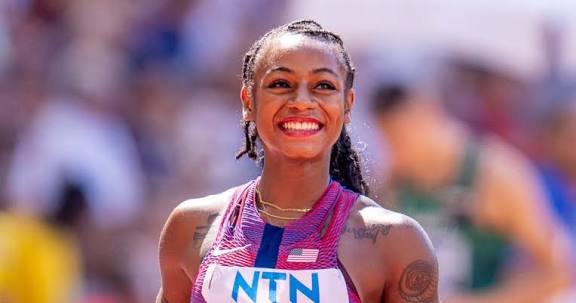
Whether the claim about Sha’Carri Richardson’s UNICEF ambassadorship proves accurate or not, the reaction itself reveals how deeply fans want to believe in acts of generosity and positive impact.
Ultimately, the moment underscores two parallel truths: the enduring appeal of athletes who are seen as giving back, and the need for careful verification in an online environment where inspiration and misinformation can sometimes travel side by side.
Leave a Reply