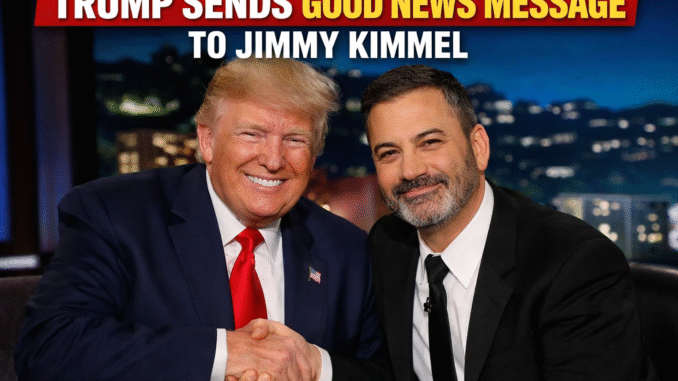
- Trump and Jimmy Kimmel: Conflict, Culture Wars, and the Limits of Goodwill.
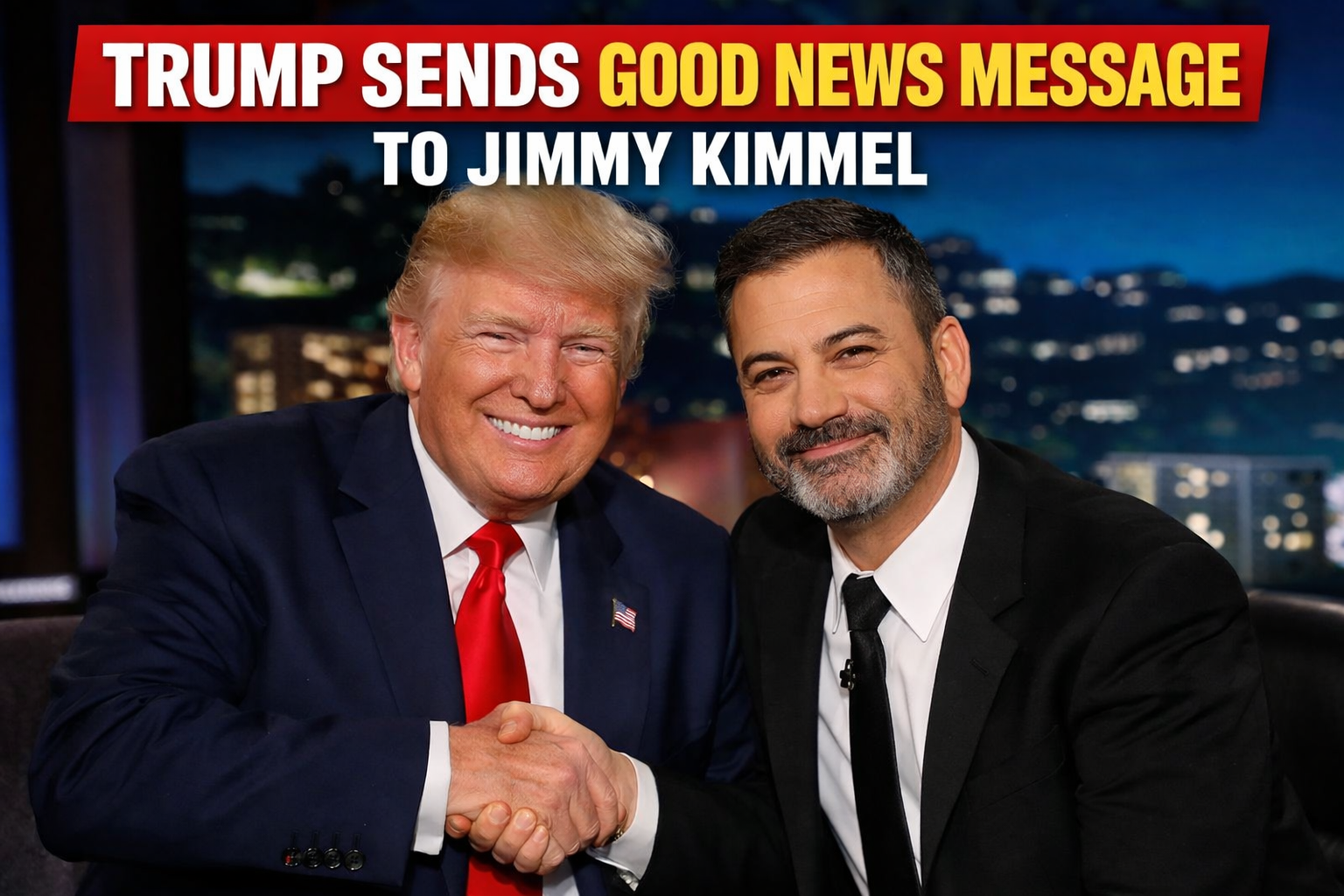
In an era of deep political polarization and cultural confrontation, few public figures embody the clash between entertainment and politics as starkly as former President Donald J. Trump and late‑night television host Jimmy Kimmel. Rather than moving toward conciliation or compromise, the relationship between the two remains marked by public criticism and sharp rebukes — underscoring the broader tensions in American political discourse.
A History of Public Feuds
Trump has long been a frequent critic of late‑night hosts who lampoon his politics and persona, and Jimmy Kimmel has been among the most outspoken. Throughout Trump’s first term in office and into his second, Kimmel routinely skewered the president’s policies, rhetoric, and behavior in monologues on Jimmy Kimmel Live!. These segments often drew both laughter and ire, contributing to a long‑standing media feud rooted in sharp ideological differences.
Wikipedia
Rather than easing with time, the conflict intensified during the tumultuous events of 2025. In September, ABC briefly suspended Jimmy Kimmel Live! following a controversial monologue in which Kimmel criticized conservative reactions to the murder of Turning Point USA founder Charlie Kirk, a high‑profile conservative activist.
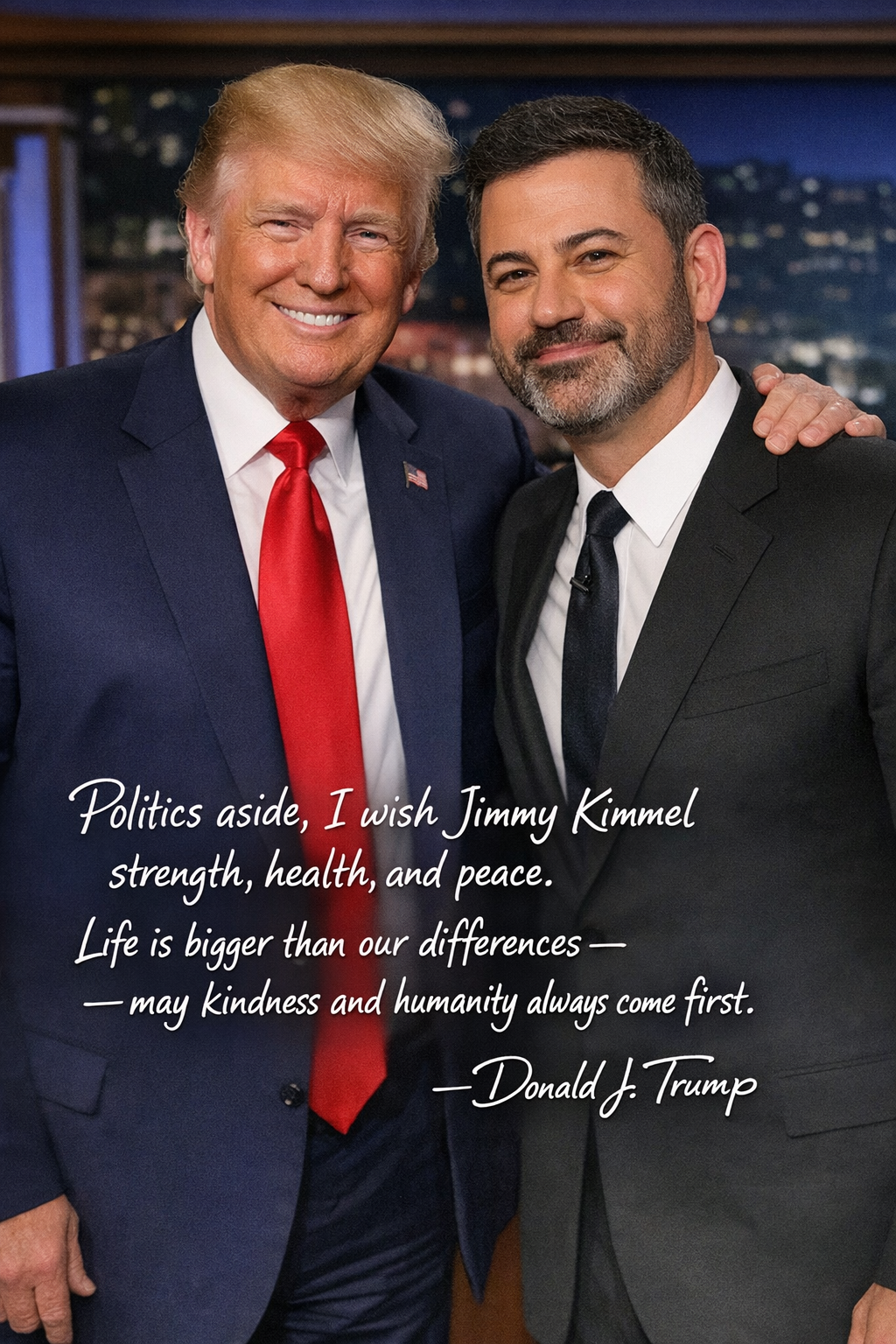
Trump and his supporters publicly celebrated that suspension, with Trump attacking Kimmel’s talent and demanding further action against critics in the media. For example, Trump wrote on his social media platform that Kimmel should be removed from the air and disparaged both the host and the network that employs him.
Free Speech and the Suspension Backlash
The decision to suspend Kimmel’s show triggered a fierce backlash from journalists, entertainers, politicians, and free‑speech advocates. Critics argued that punishing a comedian’s commentary threatened First Amendment protections and signaled undue political influence over entertainment media. Several civil liberties organizations penned letters defending freedom of expression, noting that pushing a public figure off the air due to political disagreement sets a dangerous precedent.
Under intense public pressure — including from voters, advertisers, and audiences — ABC reversed course and restored Jimmy Kimmel Live! to its regular schedule just days later. That reinstatement was widely reported as a victory for defenders of free speech and an embarrassment for critics who had called for censorship.
Trump’s Continued Criticism Rather Than Goodwill
Rather than soften his stance, Trump has continued to criticize Kimmel publicly on multiple occasions. In December 2025, Trump disparaged Kimmel’s entertainment skills while promoting his own role hosting the Kennedy Center Honors, telling reporters that if he couldn’t outperform Kimmel in talent, he shouldn’t be president. This comment was framed as humorous but was another clear jab rather than a gesture of goodwill.
uk.news.yahoo.com
Trump’s remarks have included labeling Kimmel as “horrible” and attacking the late‑night host’s career, often on social media and in public remarks. These attacks have been reported in multiple outlets and were made in the context of continuing political disagreements, not reconciliation.
Kimmel’s Responses: Humor With a Political Edge
Kimmel has taken Trump’s criticism in stride, turning it into material for his own show. When Trump called for him to be fired again in November 2025, Kimmel used the moment to acknowledge that Trump was watching Jimmy Kimmel Live! — humorously thanking him for tuning in live. This exchange highlighted Kimmel’s defiant, ironic approach to the feud: rather than retreat, he often leverages Trump’s commentary as comedic fuel.
In his monologues, Kimmel has made clear that he enjoys the role of holding powerful figures to account through satire. He has joked that he would leave television only when Trump leaves office, capturing the playful yet confrontational nature of the ongoing interaction.
Impact on American Culture and Politics
The Trump–Kimmel dynamic reflects broader cultural divides in the United States, where celebrities, comedians, and entertainers are deeply entwined with political conversation. Late‑night hosts like Kimmel often function as cultural critics — using humor to critique leadership and policy — even as politicians like Trump use direct communication channels to rally supporters and respond aggressively to criticism.
The persistent back‑and‑forth between the two figures underscores how entertainment and politics have increasingly collided. Rather than a one‑off gesture of goodwill, the interactions between Trump and Kimmel illustrate how media personalities and political leaders engage audiences not only through formal statements but through viral moments, social media posts, and television broadcasts.
Where Goodwill Could Emerge — But Hasn’t Yet
While individual moments — such as Kimmel acknowledging Trump’s viewership or public apologies made in other contexts — might seem superficially positive or humorous, these interactions do not constitute a meaningful goodwill message in the journalistic sense. Goodwill would imply an explicit effort by Trump to bridge differences, praise Kimmel’s work irrespective of political views, or call for unity across partisan divides. At present, there are no reliable reports from major news outlets confirming such an overture.
Instead, the public record shows continued criticism and satire, which fuels ongoing debate about free speech, media influence, and political discourse in the United States.
Conclusion
The narrative that President Trump sent a meaningful goodwill message to Jimmy Kimmel amid political differences does not align with available verified reporting. Instead, the relationship remains contentious, characterized by mutual commentary that is often humorous, critical, and emblematic of the polarized state of contemporary American media and politics. Until credible news reports emerge documenting an actual goodwill outreach, the public record reflects an adversarial interplay rather than reconciliation.
Leave a Reply